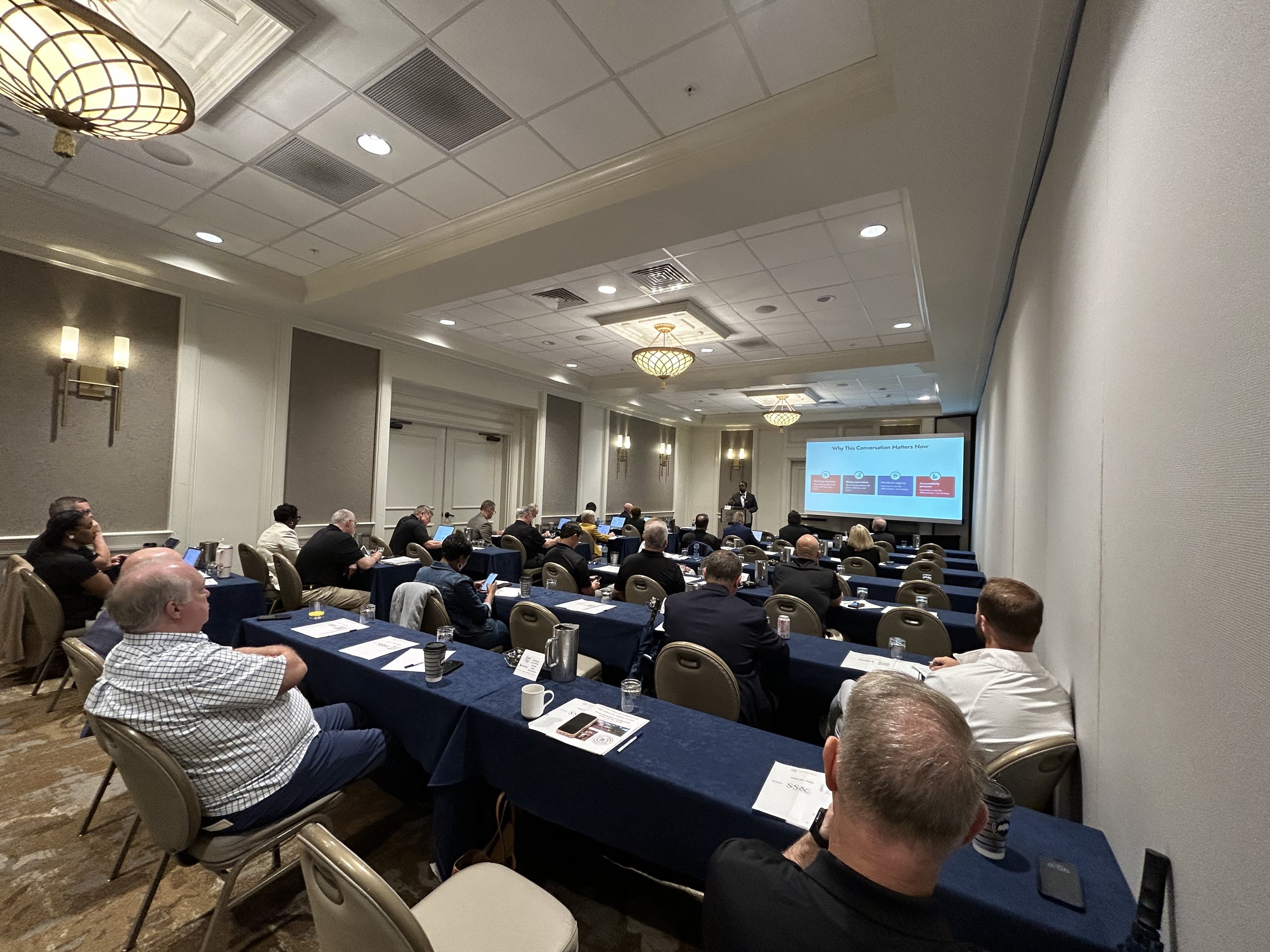
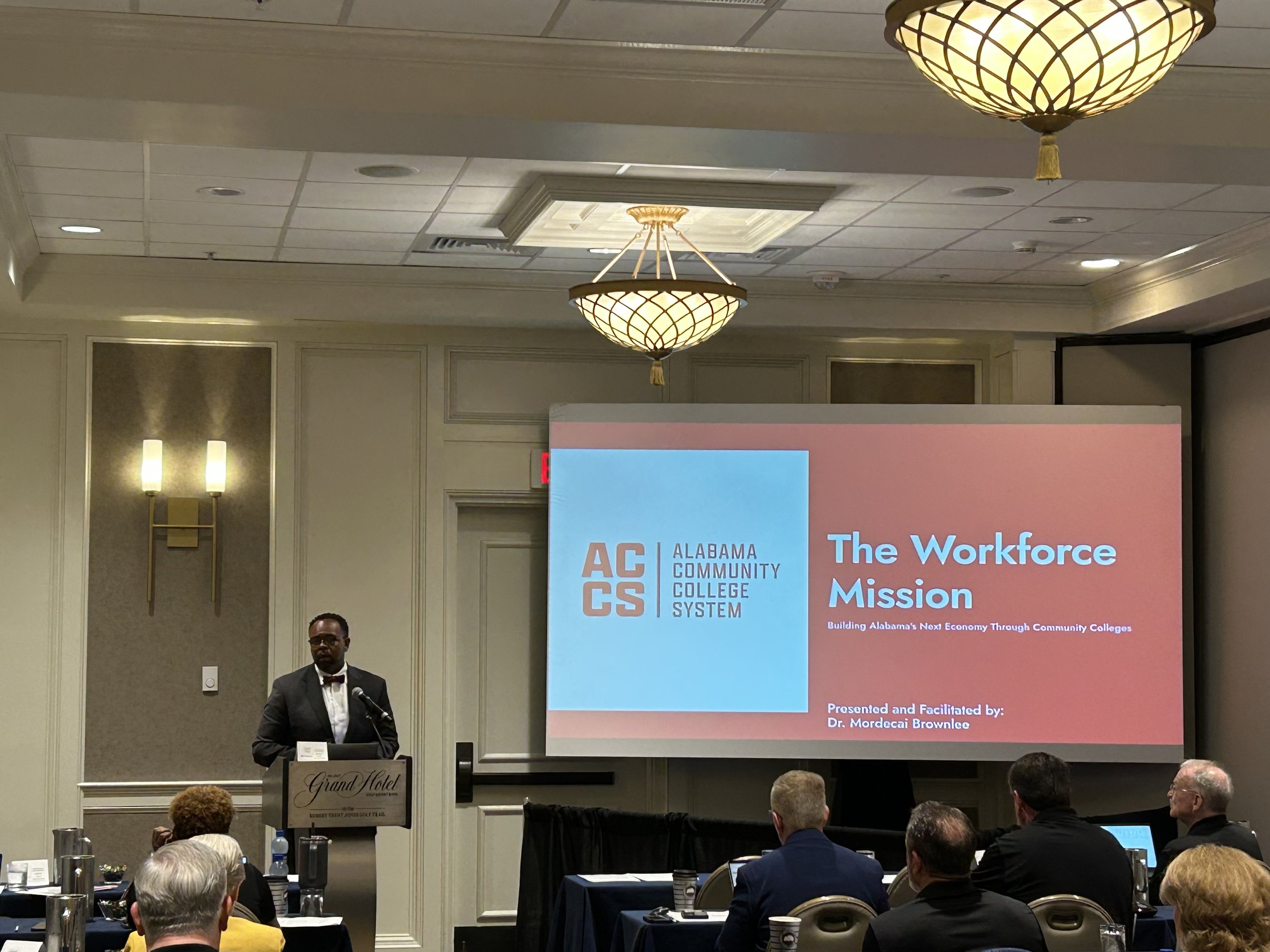
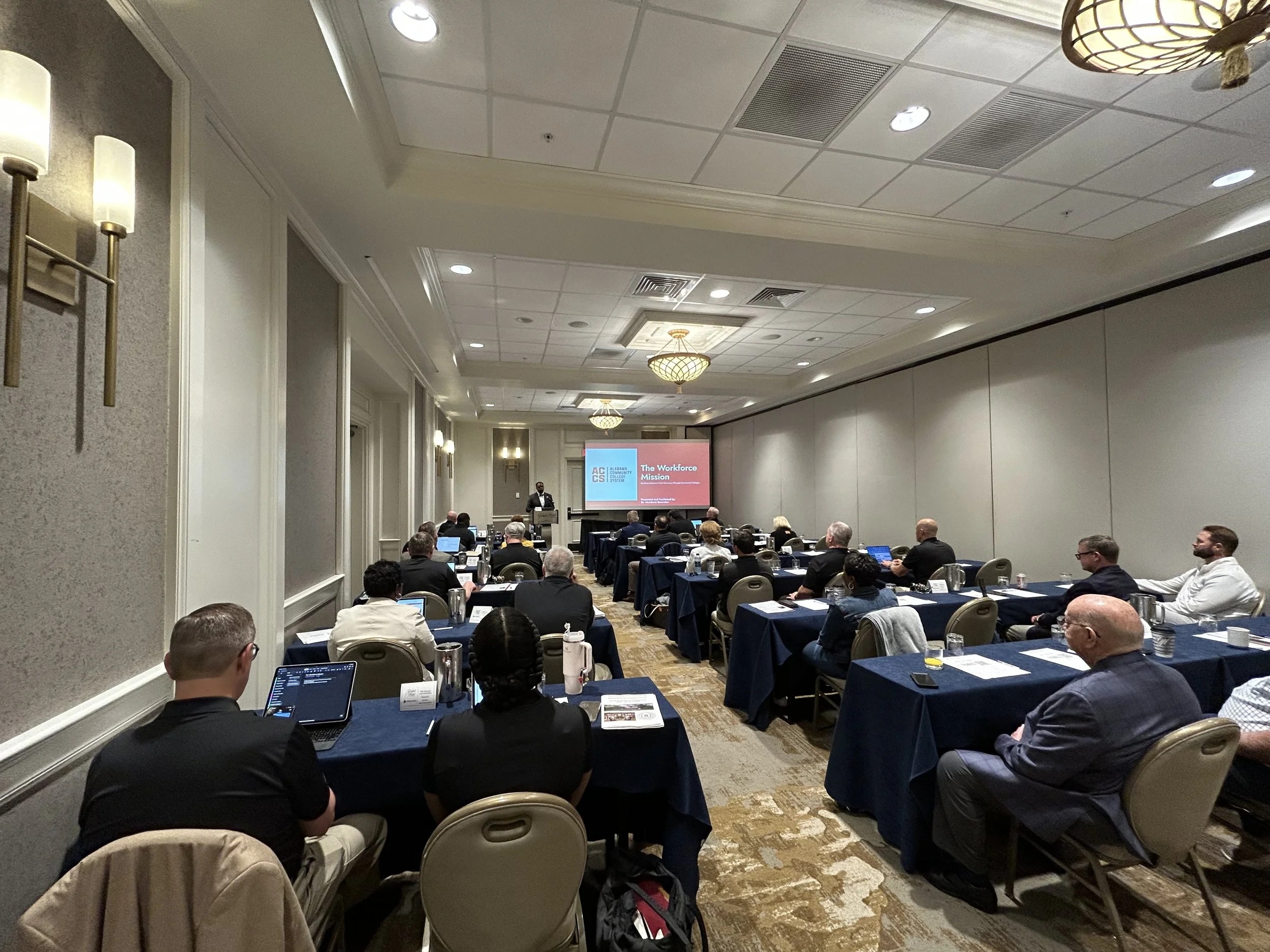
FAIRHOPE, ALABAMA — Dr. Mordecai Brownlee, President of the Community College of Aurora, recently joined the presidents of the Alabama Community College System for a leadership discussion focused on the evolving role of community colleges in workforce development, economic mobility, and talent cultivation.
Led by Jimmy H. Baker, Chancellor of the Alabama Community College System, Dr. Brownlee delivered a presentation that challenged higher education leaders to reconsider how institutional success is measured in an era increasingly defined by workforce outcomes and economic impact.
Drawing upon themes from his recent national speaking engagements and published thought leadership, Dr. Brownlee emphasized that the future of community colleges extends beyond enrollment, retention, and credential attainment. Instead, institutions must increasingly position themselves as comprehensive talent development systems that connect learners to meaningful employment, support regional economic growth, and create pathways to long-term prosperity.
"Community colleges occupy a unique position within the American economy," Dr. Brownlee shared during his remarks. "We sit at the intersection of education, workforce development, economic mobility, and community advancement. Our responsibility is not simply to award credentials, but to ensure those credentials lead to opportunity."
Throughout the presentation, Dr. Brownlee encouraged college leaders to strengthen partnerships with employers, align academic offerings with workforce demand, and adopt outcome measures that more directly reflect employment and wage progression. He noted that as policymakers and industry leaders increasingly focus on workforce outcomes, community colleges have an opportunity to demonstrate their value as engines of talent development and economic mobility.
The discussion also explored the changing expectations of learners and employers, the growing importance of industry partnerships, and the role community colleges can play in helping regions address workforce shortages while expanding access to family-sustaining careers.
Following the engagement, Dr. Brownlee expressed appreciation for the opportunity to learn alongside leaders from across Alabama and praised the system's commitment to innovation and student success.
"Alabama's community college leaders are engaging in important conversations about the future of education and workforce development," Dr. Brownlee said. "Their willingness to embrace change while remaining focused on student opportunity is both encouraging and inspiring."
Dr. Brownlee also extended special gratitude to Chancellor Baker for his leadership and for fostering a culture of collaboration and innovation throughout Alabama's community college system.
As states across the nation continue to examine how education institutions contribute to workforce readiness and economic competitiveness, Dr. Brownlee remains committed to advancing conversations that position community colleges as catalysts for individual achievement, community prosperity, and national economic growth.